Most searches for beaches in Guanacaste pull up long sandy stretches. Playa Bonita is not that beach. It has no calm open water for casual swimming, no lounge chairs, no beach bar. What it has, when the tide is right, is something genuinely rare: a natural tide pool system and snorkel lagoon that guests keep calling the best part of their week.
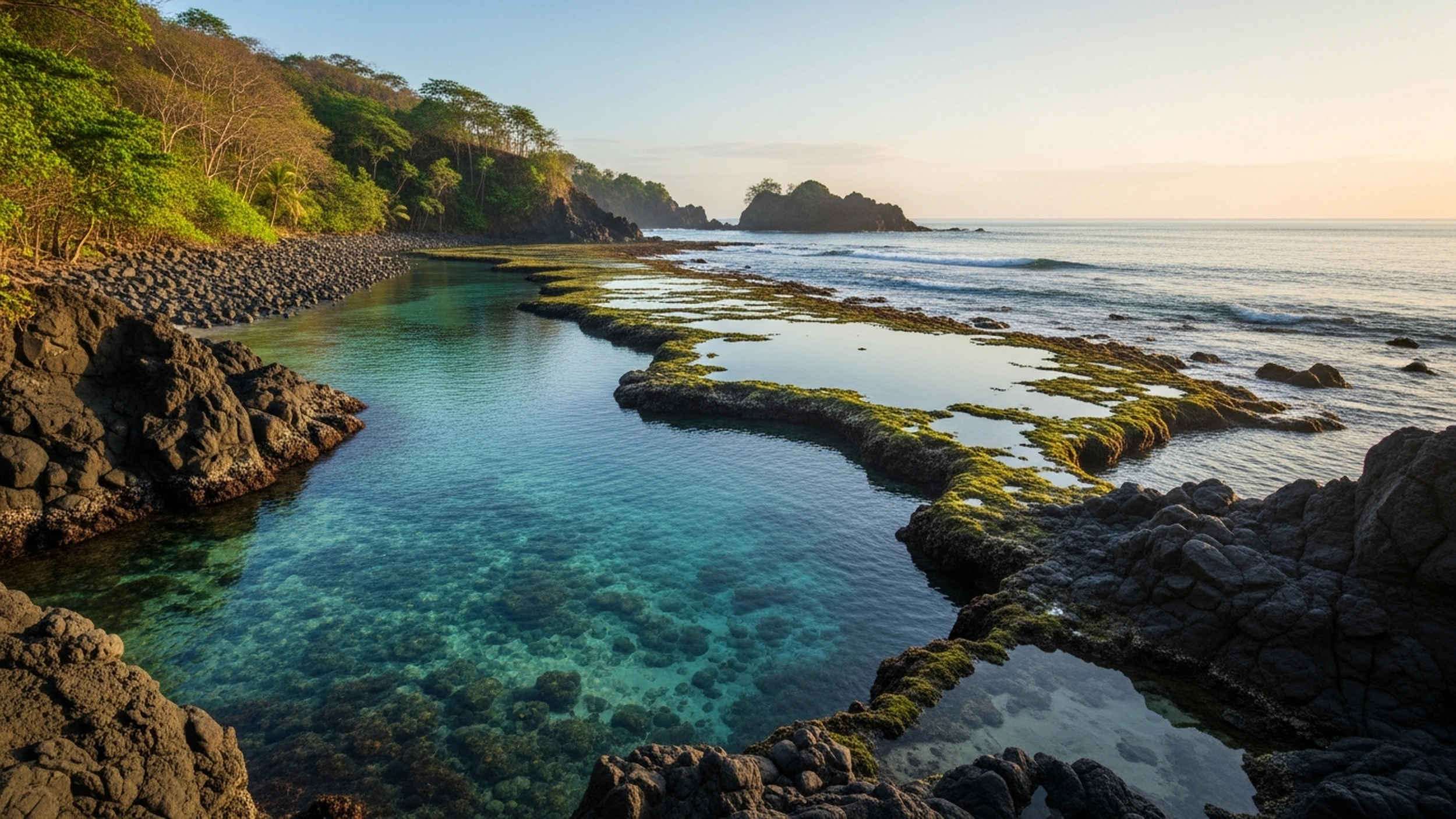
The rocky shoreline that makes Playa Bonita unsuitable for swimming is exactly what creates the tide pools. When the Pacific reef is exposed at low tide, water gets trapped in natural rock basins along the shore, each one its own small ecosystem. Deeper channels between the reef and the beach fill with calm, clear water that is ideal for snorkeling. Stand at the water's edge at low tide and you are looking at the kind of marine environment most people only see on nature documentaries.
What the tide pools at Playa Bonita actually look like
Playa Bonita tide pool exploring is not the same as poking around the rocks at a northern California beach. The water is warm, the reef is alive, and the diversity of what lives inside the pools is genuinely startling to guests seeing it for the first time.
The tide pools range from shallow basins a few inches deep, where children can crouch and watch hermit crabs and small fish in complete safety, to deeper channels where snorkelers can float and explore the underside of the reef. The Playa Bonita tide pool system runs for a considerable stretch of the shoreline, so there is always something new a few meters further along the rocks.
Costa Rica tide pools on the Pacific coast are known for their richness, and Playa Bonita is a strong example. The mix of volcanic rock and reef creates the right structure for tide pool ecosystems to thrive: complex surfaces, varied water depths, and protected exposure from the open ocean. Guanacaste tide pools are not as widely written about as the Caribbean coast, but guests who have done both consistently describe the Pacific reef system as more dramatic.
"Bonita Beach is a magical secluded beach with reefs and crystalline waters. During low tide it becomes a large lagoon ideal for snorkeling. We saw lobsters, many types of coloured fish and even a turtle. It was so exciting."
Marja, repeat guestThe snorkel lagoon: what forms and what you will find
Beyond the tide pools, the reef at Playa Bonita creates something larger: a true snorkel lagoon. When the tide drops, the outer reef acts as a natural barrier and the water inside calms completely. The visibility opens up. This is where the bigger marine life appears.
Guests staying at Casa Bonita Beach have reported lobsters, sea turtles, parrotfish, and a wide variety of reef fish in the low-tide lagoon during their stays. One family described having the lagoon entirely to themselves for an entire morning. The calm, shallow water makes it accessible for swimmers of most levels, and the protected nature of the lagoon means conditions inside are dramatically calmer than the open ocean beyond the reef.
The Playa Bonita snorkel lagoon is not a secret among guests who have actually stayed here. It is, however, almost entirely absent from online coverage of Hacienda Pinilla. Most travel articles mention that the beach is rocky and move on. The lagoon and tide pools are what that summary misses.
Tide pool exploring with kids at Playa Bonita
The tide pools are one of the best family activities at Hacienda Pinilla for young children specifically. Unlike snorkeling in the open lagoon, tide pool exploring requires no swimming ability and no gear beyond water shoes and curiosity.
Young children find the Playa Bonita tide pools endlessly engaging. Hermit crabs moving house between shells. Small fish darting between rocks when a shadow crosses the water. Sea urchins tucked into crevices. The occasional starfish. Older kids who snorkel out into the lagoon proper inevitably circle back to drag the younger ones over to whatever they just spotted at the reef edge.
Multiple reviews from family groups specifically mention tide pool exploring as a highlight that the kids talked about for weeks after the trip. The beach is close enough to the villa that you can do a low-tide tide pool session in the morning and be back at the pool for lunch without it feeling like an expedition.
Practical checklist for the lagoon and tide pools
- Check the tide chart the evening before. Your concierge can help, or use a free app like Tide Alert or Tides Near Me. The Guanacaste coast has a significant tidal range, so timing matters.
- Arrive 20 to 30 minutes before low tide to get the full window as the water recedes and the tide pools fully expose.
- Water shoes or reef shoes are essential. The approach and the tide pool area are rocky and can be slippery when wet.
- Bring a snorkel set for the lagoon. The villa concierge can arrange gear rental before your arrival.
- Bring an underwater camera or a waterproof phone case. Guests consistently say this is the one thing they wish they had done differently.
- Do not stand on the reef or on the tide pool organisms. Float flat in the lagoon, and crouch rather than step in the pools.
- Morning low tides offer the best light and the calmest wind. Afternoon tides work but the onshore breeze picks up and can reduce visibility.
How to plan your low-tide window
Tides in Guanacaste follow a semi-diurnal pattern: roughly two low tides and two high tides per day, shifting by around 50 minutes each day. During a week's stay at Casa Bonita Beach, the low tide window will fall at a different time each day, rotating from early morning through afternoon and back.
The best conditions for the Playa Bonita tide pools and snorkel lagoon are a low tide that falls between 6 and 10 in the morning. The wind is still, the light comes in at an angle that illuminates the water beautifully through the pools, and the marine life in the lagoon tends to be more active before the midday heat. Your concierge can tell you which mornings that week will have the best window and plan around it.
Playa Bonita vs other Guanacaste tide pool beaches
Tide pool beaches in Guanacaste are not common. Most of the region's famous beaches, including Tamarindo, Avellanas, and Grande, are long sandy stretches with little reef structure at the shore. Playa Bonita is unusual in having a developed reef right at the waterline that creates genuine tide pool habitat.
The Snorkeling Report's Costa Rica guide lists the Guanacaste reef system as one of the richer snorkeling environments on the Pacific coast, and the proximity of Playa Bonita to the villa makes it the most accessible option for guests at Casa Bonita Beach. For a comparison of the beaches in the area and what each offers, the guide to Playa Bonita vs Avellanas vs Langosta covers the tradeoffs in detail.
Getting to Playa Bonita from the villa
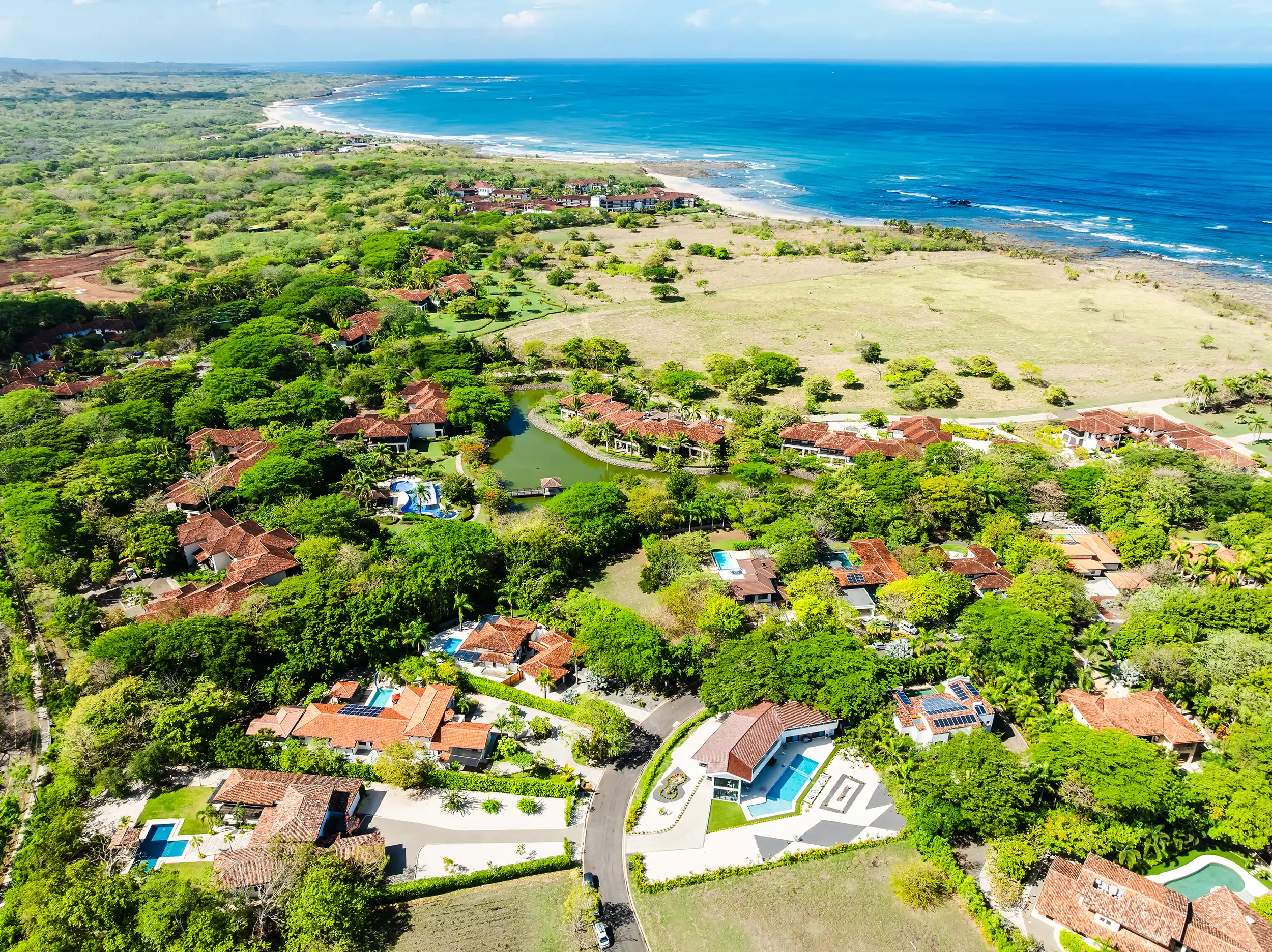
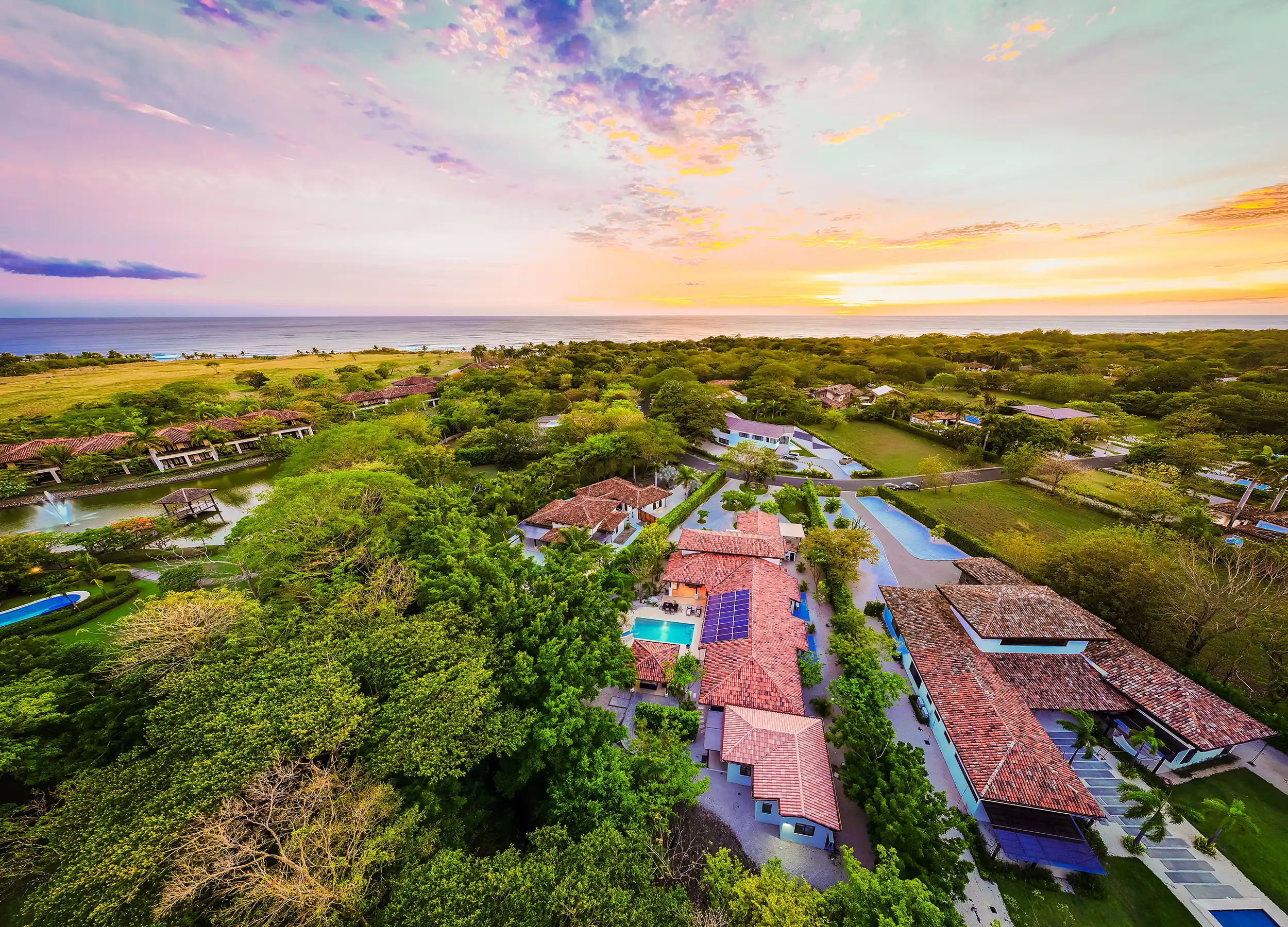
The walk from Casa Bonita Beach to the tide pools takes about 5 minutes on shaded paths through the Las Golondrinas neighborhood inside Hacienda Pinilla. The route passes under tree canopies where howler monkeys are a reliable morning presence. Several guests have spotted deer, macaws, and iguanas on the same walk to the beach.
For guests with young children, grandparents, or anyone who does not want to navigate the rocky beach approach on foot, the golf cart rental covers the distance in under two minutes and makes repeated tide pool trips easy across the whole week.
What else is along the coast
After a morning at the tide pools and lagoon, the coastal walk south connects to the JW Marriott beach bar for a drink or a meal, and continues to the Hacienda Pinilla Beach Club, which has a pool, a casual restaurant, and lounge chairs for the afternoon. The full route from the villa to the Beach Club and back makes an excellent half-day: tide pool exploring at dawn, walk the coast, lunch in a proper chair. That combination comes up in reviews more than almost anything else guests plan for themselves during the week.
For a broader overview of the community, activities, and all four beaches inside Hacienda Pinilla, our Hacienda Pinilla guide covers the full picture.